Welcome to 'itsyour-site.blogspot.in'

Wednesday, 4 April 2012

What image compression settings to use when converting an image to jpg/jpeg


                 I have been trying to find the perfect compression settings to use when converting my digital images to ‘jpg’ or ‘jpeg’ format that yields the best result in terms of the image quality and the image size. There are various softwares out there that can convert images e.g. Photoshop, ACDsee, ImageConverter etc. I always used to use the same 90% compression settings for converting from ‘bmp’ to ‘Jpg’ and for all my other digital image compressions without much thought. As my photo collection from my digital camera is getting bigger I wanted to efficiently archive my images without losing too much image quality. Also after taking a look at my monthly bandwidth usages for my website, I found that the images are consuming the highest bandwidth. So I needed to be more efficient on the image compression of the images that I use for my website to save bandwidth(How to save website’s bandwidth and storage usage)

Converting Image from BMP to JPG

I did a little experiment with the following image (This is just a compressed version of the original image).

Original Image Properties
Image Type: Bitmap Image
Image size: 3.94 MB
Image Width: 1454 pixels
Image Height: 947 pixels
Horizontal Resolution: 96 dpi
Vertical Resolution: 96 dpi
Bit Depth: 24
Frame Count: 1

I converted the Image into JPG format using various compression settings (100% – 5%) and recorded the resulted image size for each settings.
Compression settings (%)
Image Size (KB)
100
909
95
389
90
235
85
171
80
136
75
112
70
99
65
88
60
79
55
73
50
69
45
65
40
60
35
57
30
52
25
48
20
43
15
39
10
33
5
27
Then I plotted the following graph of Compression setting (%) Vs Image Size (KB) from the above data.

              After analysing the Image quality and the image sizes I found out that even using 80% compression setting yields a nearly same quality photo which is good enough for my digital photo collection archival purpose. Even 50% compression setting yields a usable image that can be used on my website without significant difference from previous but I save a lot on the site’s storage and bandwidth.
Before, I was using 90% compression setting which resulted an image size of 235 KB. Using 50% compression setting, the resulting image size is 69 KB. So I save about:
(235 – 69) = 166 KB per image.
Multiply that by 1000 unique visitors and I get:
(166*1000) = 166000 KB = 166 MB savings from one image!
              You may need to find out your own sweet spot of compression settings that you like to use based on the image quality that you prefer but the general message is that it pays off to use different compression settings based on the situation.

How to Make a PayPal Mass Payment


If you frequently make paypal payments to multiple recipients (e.g. to payout for affiliate commisson) and if you don’t use the PayPal’s mass payment option then this article is for you. Now, my first question to you is “Why aren’t you using mass payment again?” :)
PayPal’s mass payment allows anyone with a Premier or Business account to send multiple payments instantly and has the following two big advantages:
  • You save big on the fees. A low fee of 2.0% of the payment amount with a cap of $1.00 USD (or its equivalent in the payment currency) is assessed on each payment made with Mass Payment.
  • Payments with PayPal’s Mass Payment are instant so you don’t have to mail out the checks.

How to Make a PayPal Mass Payment

Step 1: Create a Mass Pay File

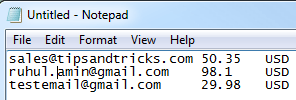
Create a tab-delimited text file. List the recipients’ email addresses in the first column and the payment amounts in the second column. In the third column, enter the three-letter code for the currency in which the payments will be sent. The following is a screenshot of a sample mass payment file:

Screenshot of a Mass Pay File

Step 2: Make the Payment

In this step you have to log into your PayPal account and use the mass pay file created in step 1 to make the actual payment. Watch the following video tutorial to learn how the whole process works:

7 Advantages to Using PayPal to Buy Online

          PayPal is one of the largest online payment processors in the world. After rising to prominence through its partnership with Ebay, online merchants all across the Internet accept PayPal as one of their accepted methods of payments.
           Those who have never used PayPal may wonder why so many people use it as their only way to pay for online purchases. After you review the following seven advantages to using PayPal to buy online, you will likely want to start using PayPal yourself.
1. Credit card security: When you sign up for a PayPal account, you type in the credit cards and bank accounts you wish to use for purchases one time on the PayPal secure system. Once that is accomplished, you never again have to disclose your credit card information online. By paying with PayPal, you keep your credit card information private, meaning that you can shop without worrying about a hacker downloading your account data from your online merchant.
2. Flexibility: Relieve yourself of the embarrassment and hassle of trying to purchase goods and services online only to have your credit card declined. Because you can set up multiple bank accounts, debit cards, and credit cards to fund your PayPal account, you can rest assured that your PayPal purchases always go through the first time. PayPal will then look for funds from your sources based on the order you define.
3. Send money: Whether you need to send money to a child at college or a friend in trouble across the globe, PayPal users can instantly transfer money to them with just a click of the mouse. Save time and money over costly Western Union style transfers while getting money to where you wish to send it faster than ever.
4. The iPhone App: The PayPal iPhone application makes it easy to shop online and transfer money wherever you are. All you have to do is visit the Apple iTunes store and search for the PayPal app and you will be ready to transfer, send money, pay bills, review your transaction history, and make purchases right from the palm of your hand. Because PayPal will ask you to confirm transactions with a PIN, you can rest assured that your finances are safe should your iPhone be lost or stolen. If you meet someone you need to pay while out on the town, just bump iPhones and make your transfer.
5. Online Auctions: How could anyone talk about PayPal without mentioning eBay? Because PayPal is integrated with the online auction powerhouse, you can place bids and make purchases safely. Buyer protection and a structured complaint resolution process means that eBay bidders have more protection than most credit card holders when it comes to one of the most popular online shopping sites.
6. Cost: One of the best reasons for using PayPal is its cost: free. That’s right. No annual membership fees, no processing fees, no service charges. Shoppers using PayPal get all the powerful advantages associated with the service and do not have to pay one dime.
7. Discounts: PayPal sponsors special discounts for customers that shop with PayPal at selected retailers. Users who visit www.paypal-shopping.com can find the latest special offers from companies like HP, Barnes & Noble, Wal-Mart, Nike, and more. The bottom line is that PayPal can save you money on the things you need at the places where you shop. To take advantage of the savings all you have to do is copy the special promo code from the PayPal shopping Web page and paste it into your order at your merchant’s site when you pay with PayPal.
                 These seven advantages to using PayPal to buy online are enough to make you want to give PayPal a try. If you have never opened a PayPal account, go ahead and create one today. If you have only used PayPal at eBay, the time is now to see the whole world of opportunity that PayPal opens up for you.


Are Your Habits the Barrier to Your Online Business Success?


             The evolution of technology, particularly in the Internet realm has made it easier than ever before for virtually anybody to go online and use their creativity or enterprising skills to make a comfortable living or even create an Internet empire.
              When you consider that the physical overheads of creating an online business are virtually negligible, you can start multiple businesses online for a minuscule outlay of money (all you really need are an Internet connection and a computer to get you started).
              Compare this with setting up an offline business which can run up into hundreds of thousands or even millions of dollars of start-up capital just to get off the ground, and you can see why there are more people than ever before trying their luck on the fertile grounds of the world-wide-web.
              But look more closely and you’ll see that the majority of these budding online entrepreneurs rarely make it to the big time; heck, they barely make a few dollars a month and in most cases nothing at all. What’s more, an estimated 70% of online start-ups don’t even last 120 days.
              Why would this be so, even when it has never been easier to get an answer or solution simply by doing some research online or getting some help by outsourcing?
               You’ll find that if you dig deeper, that a lot of the people that fail to reach their potential on the Internet have bad habits which sabotage their efforts at getting their business or blog off the ground. In actuality, these same bad habits are most probably responsible for the failure or supposed “bad luck” in other areas of their life too. The point I want to make is that your habits truly are that important that they are instrumental to your success.
What is a habit anyway? The Cambridge dictionary defines it as:
something which you do often and regularly, sometimes without knowing that you are doing it”.
                In other words, habits are so firmly entrenched in your subconscious that they are almost like an autopilot for your actions. They were formed by repetition of a particular thought or action. Some psychologists believe that to weed out “bad” habits and replace them with “good” habits takes about a month of repetitively enforcing the good habit and consciously avoiding the bad.
              The good news is that it is quite easy to cultivate new good habits and do away with your bad habits. The first place to start is with your thoughts. If you constantly think that something is just “too hard” or that you “aren’t smart enough” to do a certain thing, then these thoughts eventually transform into actions or in-actions. So before you do anything, get into the habit of monitoring your thoughts from time to time and see if you can catch yourself thinking “I can’t”  or “I’ve missed the boat” or “this thing is too hard”. Sometimes this alone can greatly reduce the thoughts of inadequacy or negativity because you are actually becoming aware of them.
                Another crucial step in forming new good habits is to simply get into the daily practice of “doing” what needs to be done for your Internet business or blog. For instance make it a requirement (just like having lunch or dinner or showering daily), that you will spend 30 minutes or an hour every day on a task related to your business or writing a new article for your blog. Start at first by challenging yourself that you will not skip a day for the next 2 weeks. Then extend this to a month and so on. This will quickly become a habit and you’ll find that it will be a natural part of your day.
Here are some more suggestions of good habits to get you started:
  • Consistency: The majority of us have to work a full-time job to pay the bills, hence our online business work has to be done on the side or during our spare time. A lot of people complain that they simply do not have any spare time, but I’m a firm believer that if you really wanted to, you can make time. For example, wake up an hour earlier every day or spend at least an hour when you come home from work on your Internet business or project. Or, instead of watching your favorite sitcom, substitute this with work on your Internet business instead. It’s a small sacrifice to make for a potentially huge gain. Do this consistently every day (even for half an hour) and you will make incredible headway in getting your online business off the ground. I frequently like to remind myself of an old Chinese saying which goes something like: “A thousand mile journey begins with a single step
  • Perseverance or Persistence: Given that the overhead is relatively low for starting an online business, you can actually afford to fail multiple times without “going under” financially. The few who actually make the big time on the Internet have a strong persevering quality which eventually enables them to discover what works and learn from what doesn’t work. Quite often many of those who are doing very well online actually failed many times before they succeeded.
  • Habitual Curiosity: Have you ever noticed that some people always want to know how something works or the answer to a question? Before they ask an expert they do extensive research on their own and quite often find the answer or solution to their problem by their own efforts. Well it might not surprise you to know that people with this type of quality or habit are often the ones that succeed in the online world.
    There are so many resources available to you for learning a new skill online that all it takes is some curiosity and willingness on your part.
    For example you could subscribe to some video tutorials to learn how to implement some JQuery on your website or maybe search through forums to find an answer to a question. Your options are endless.
            Just remember that repetition is the key to cultivating your good habits.  So in ending I pose the following question to you: do you have any habits which are holding you back from your success in the World-Wide-Web?

6 Tips to Help Ignite Your Creativity and Increase Your Success


When it comes to achieving success on the Internet or anything in life for that matter, it probably isn’t a secret that having some capacity of creative spark or talent can increase your chances of attaining your goals.
But what makes some people more creative and successful than others? Is creativity something genetic and does that mean those who aren’t blessed with this gene are doomed to never be creative or successful?
Well the simple answer is that creativity is something which we are ALL born with but some people lose it more than others as they grow older. If you observe young children playing you’ll know what I mean when I say we all start with a propensity for some kind of creativity which is usually fueled by curiosity.
Many people lack a creative spark because they stopped doing the simple things which leads to creative ideas in the first place.
Most people, as they grow older start to develop bad habits or a limited mindset maybe because they are in a job they don’t like or a difficult financial situation. As time goes by, the curiosity they had when they were children diminishes and with that so does creativity.
Instead of using their curiosity and creativity to investigate ways to improve their lives these people give up trying but they also wish things could be different.
A lot of people also believe that to achieve true financial or other success you need to invest a lot of money in the first place or have to go to a top university so that you get the right job in the right company.
The reality is, that at this point in time in the evolutionary scale of technology, everything you need to make you successful is readily available at your finger tips from the Internet in the comfort of your own home. We can even go so far as to say that the Internet is the new “UniversityofSuccess”.
A little over a decade ago you could be excused for believing that you needed to attend some sort of college or university to learn the necessary skills to help you succeed, but now that’s not true anymore.
For a fraction of the cost of a regular university or college course, now you can teach yourself a new skill or get full guidance and coaching online without having to leave your home.
All that is needed on your part initially is some curiosity and action to get you started.
The list of 6 pointers below which I’ve compiled from various successful people will help ignite your creativity and re-charge your motivation:
  1. Try something new for 30 days
    This is a great suggestion which I recently heard in a presentation from Matt Cutts who is a search optimization engineer at google. Trying something new for a month is a fantastic way to re-build your creativity and whet your curiosity. This can also help you discover the thing that you love doing in case you weren’t sure what it was to begin with.
    In terms of the Internet there are countless of free and premium courses and products available in which you can learn or discover a new skill which you can use to enhance your creativity.
  2. Do what you love
    People who make a living from doing what they love instantly have a head-start on those who hate or are indifferent to their jobs. Apart from the fact that you feel good doing what you love, you also have no negative baggage which comes from the stress and resentment of doing something you don’t like.
    If you don’t know what you love doing, then maybe applying point 1 above might help you.
  3. Keep your goals to yourself – at least in the beginning
    Sometimes when you decide to muster up the courage to try something new it’s a good idea to keep your goals a secret initially. This may sound counter-intuitive because most people think that by making their intentions known they can increase their visibility and hence their chances of success because somebody out there might offer some help. Well that’s true to an extent but in a lot of cases the people you might be sharing your goals with might not have the same enthusiasm and mindset as you, and quite often they will try to talk you out of your “crazy ideas” and tell you that it’s just too hard.
    Therefore, unless you’re certain that you are talking to people with a similar attitude as yours, hold on to your goals and plans until you’ve put them into practice.
  4. Be curious
    When you start digging deeper into something out of curiosity, you usually find that not only do you enhance your knowledge about that thing, but sometimes you might come up with creative ideas which you would never have thought of if you hadn’t indulged your curiosity.
    So next time you are reading or watching a tutorial about how to do something for your blog, why not delve deeper and experiment with what you’ve learnt and see what happens.
  5. Improve
    Improving yourself both in terms of knowledge and in general can only serve to benefit you and those around you. Most of us are increasingly becoming aware of the huge economic changes sweeping the world’s societies in terms of employment and what it means to be financially secure. Having a regular job for 20, 30 or 50 years until you retire is a thing of the past. The new reality is that people who can re-skill quickly and who regularly add to their existing skills will be better off in today’s economic climate.
  6. Focus
    The ability to focus determines the outcome of the task you are trying to accomplish. Therefore whenever you set yourself a task, see it through to completion by doing regular highly focused little chunks at a time. Doing small manageable chunks can make the highest mountain seems like a mole hill.
Creativity and success are not just something necessarily reserved for a special few and now with information and knowledge so readily accessible from the Internet, cultivating your creativity has never been so easy. Therefore applying some of the ingredients above to your life will go a long way in maximizing your chances of reaching your goals.

Tuesday, 3 April 2012

FAKE CURRENCY CONTEMPORARY-ISSUE

FAKE CURRENCY CONTEMPORARY-ISSUE

Many countries  is pumping fake Indian currency worth hundreds of crores each year in an attempt to destabilise the country's economy, according to the latest estimates by Indian intellignece agencies. Sources in the National Investigating Agency say that the recently seized fake notes were most likely printed in state owned printing presses in Karachi and Quetta. Fake currency is also being fed into circulation through sleeper terrorist cells.
Much of this fake currency is being smuggled into India through Nepal, Bangladesh, Malaysia and Dubai. While the first two countries have relatively open borders.
The Nepal police arrested nine people in 2011 for carrying fake Indian currency on their person. Two Pakistani couriers were also arrested in Kathmandu after they arrived from Karachi with fake notes "worth" Rs 40 lakh in the denominations of Rs 500 and Rs 1,000.
Sources in the Intelligence Bureau told The Sunday Guardian that the agency is preparing a dossier on fake notes. The Central government has already asked the different intelligence agencies and the economic offences wings of the states to prepare a dossier on such currency.
India will then raise the issue at the Financial Action Task Force (FATF), an inter-governmental body with the mandate to combat money laundering and terror financing. India wants to push this global body to initiate sanctions against Pakistan. The information collected by the intelligence agencies and the state economic offences wings will be forwarded to the Ministry of Finance for a complete report, which will be submitted to the FATF in its next meeting in October 2011.
"We are importing almost 70% of the paper from outside. Similar companies are providing paper to Pakistan as well. We have just one paper manufacturing unit and four printing presses. We need to bridge the supply and demand gap by opening some more paper factories. We can develop our own secure papers. Unless we do that, counterfeiting will not stop," a government source said.

HOW TO IDENTIFY FAKE CURRENCY


Intelligence inputs reveal that Trivandrum and Hyderabad are fast emerging as transit points for fake currency coming in from Dubai. Consignments are being transferred to other parts of the country from these cities. Most of these consignments are being smuggled into India by Dawood's Dubai-based gang. These notes are very similar to those released by the Reserve Bank of India and so it is very difficult to distinguish them.
Statements By Different Authorities:
"The government would earlier make at least two changes in the security features every year, but that is no longer the case, which is making the job easier for fake currency makers based in Pakistan," said Dr S.C. Mittal, former head of the Documents Division of Central Bureau of Investigation's Forensic Science Laboratory.
        "Nowadays, they change only the year of printing, which is not enough. Look at the United States, they change security features quite frequently. When I was heading the forensic lab, I informed the government that Pakistan was printing Indian currency and we needed to be careful in terms of security features," Mittal added.
Sources in the National Investigation Agency confirmed Pakistan's role in fake currency smuggling.
"After examining the recently seized fake currency in the laboratory it is clear that most of these notes have been printed in Pakistan. There is a huge difference between these notes and the ones seized earlier, the notes that were printed in India by some groups. The paper and printing quality are very different from the earlier notes. This suggests that these notes were printed in state owned printing press in Karachi and Quetta."
The NIA has also filed a supplementary charge sheet in a fake currency case in a Mumbai court suggesting that these notes are being circulated by an organised group and could be used for funding terror sleeper cells.